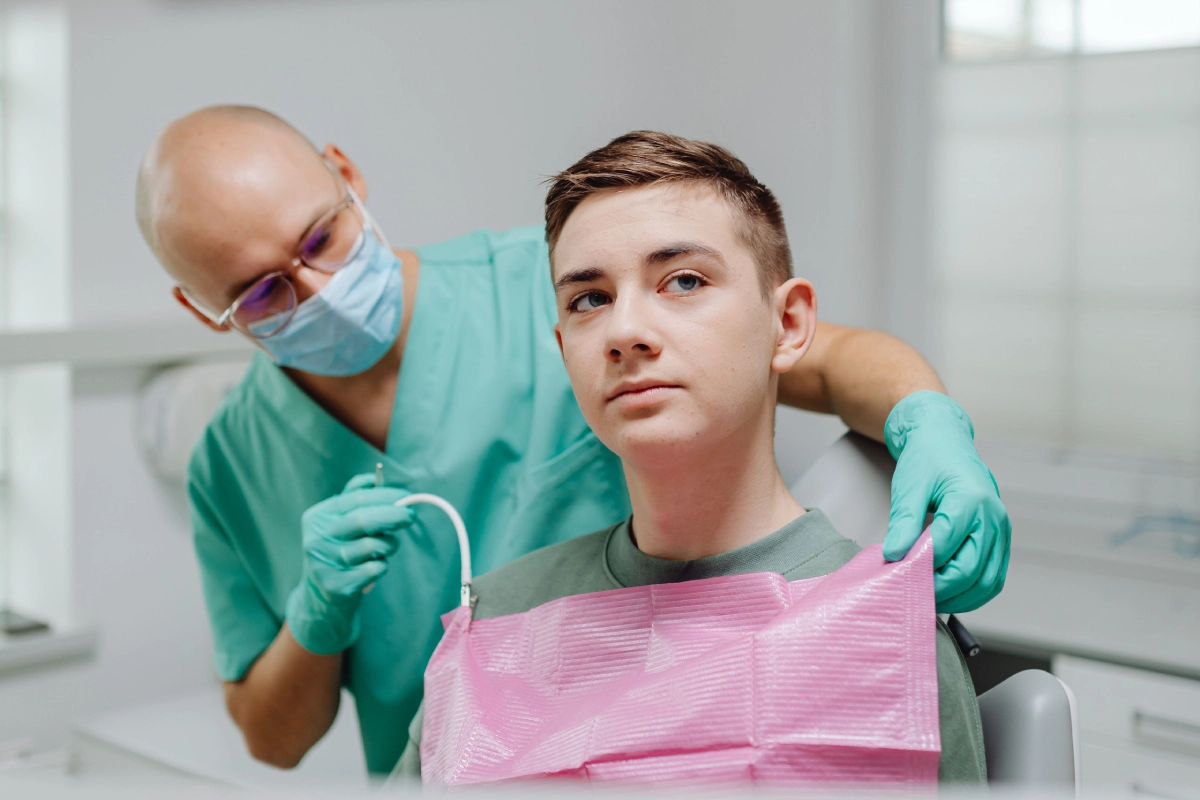

How Oral Health Changes During the Teen Years
During adolescence, oral health risks often increase. Teens begin making more independent choices about diet, hygiene, and daily routines. At the same time, most permanent teeth are already in place, making prevention especially important.
Common challenges during the teen years include:
- Skipping brushing or flossing
- Increased snacking and sugary drinks
- Orthodontic treatment and retainer compliance
- Sports related dental injuries
- Wisdom teeth development
- Hormone related gum sensitivity during puberty
- Vaping and tobacco exposure
- Busy schedules that disrupt routines
These changes make regular dental visits and guidance especially important during adolescence.
Download Our Teen Oral Health Guide
Common Dental Concerns During the Teen Years
The teen years bring new habits, responsibilities, and lifestyle changes that can affect oral health. As independence increases, teens may face new risks that were not present during earlier childhood.
Cavities and Diet Changes
As teens gain more independence, diet choices often shift. Frequent snacking, sports drinks, energy drinks, and sugary beverages can increase the risk of cavities. Less structured routines may also lead to inconsistent brushing and flossing.
We help teens understand how these habits affect their teeth and provide practical guidance to reduce cavity risk while supporting healthy choices.
Orthodontic Care and Retainers
Many teens undergo orthodontic treatment during this stage. Braces, aligners, and retainers can make cleaning more challenging and increase plaque buildup. Without proper care, teens may develop white spots, cavities, or gum irritation.
We monitor oral hygiene during orthodontic treatment and provide guidance to help teens maintain healthy teeth during and after braces.
Wisdom Teeth Monitoring
Wisdom teeth begin developing during the teen years. In some cases, there may not be enough space for these teeth to come in properly, which can lead to crowding, discomfort, or impaction.
Regular dental visits allow us to monitor wisdom tooth development and identify concerns early. This helps families plan ahead and avoid more complex issues later.
Sports and Dental Injuries
Many teens are active in sports and recreational activities. Contact sports and physical activities increase the risk of chipped teeth, broken teeth, and dental trauma.
Properly fitted mouthguards help protect teeth, gums, and jaws during sports. We discuss when mouthguards are recommended and how they help protect against dental injuries.
Vaping, Tobacco, and Oral Health
The teen years are often when exposure to vaping and tobacco begins. We focus on educating teens about how these habits affect their teeth, gums, and overall oral health in ways that are clear and age appropriate.
Vaping and tobacco can increase the risk of gum inflammation, dry mouth, delayed healing, and changes in the soft tissues of the mouth. We discuss these risks with teens and answer questions honestly, helping them understand how daily choices can impact their long term oral health.
Oral Piercings
Oral piercings of the tongue, lips, or cheeks can increase the risk of chipped teeth, gum damage, and infection. Swelling, irritation, and prolonged healing are also possible.
We help teens understand these risks and provide guidance on ways to reduce potential harm. This may include discussing safer placement options, choosing materials that are less likely to damage teeth, and avoiding habits such as playing with the piercing that can increase the risk of injury.
Building Independence With Healthy Habits
As teens become more independent, daily habits become their responsibility, making this a key time to reinforce routines and build confidence.
We work with both parents and teens to:
- Encourage consistent brushing and flossing
- Build routines that fit busy schedules
- Support healthy food and drink choices
- Reinforce retainer and orthodontic care
- Encourage responsibility for long term oral health
Our goal is to help teens develop habits that support healthy teeth into adulthood.
What to Expect During the Appointment
We adapt each visit to meet your teen where they are and address their specific needs.
During a visit, you can expect:
- Monitoring of teeth, gums, and bite development
- Professional dental cleaning
- Evaluation of orthodontic concerns
- Wisdom teeth monitoring
- Guidance on hygiene and lifestyle habits
- Clear, respectful communication with both parent and teen
These visits focus on prevention, education, and long term oral health.
Why Choose a Pediatric Dentist for Teen Care
Although teens are growing older, they still benefit from the specialized training of a pediatric dentist. Pediatric dentists understand growth, development, and the behavioral changes that occur during adolescence.
Dr. Anita Ford provides care that evolves as children grow. Teens are treated with respect and independence while still receiving guidance and support. Because many teens have been coming to our office since early childhood, we are able to continue building trust and familiarity throughout their development.
FAQ
How often should my teen see the dentist?
Most teens benefit from visits every six months for exams and cleanings, although some may need more frequent care based on their oral health.
Are cavities more common in teenagers?
They can be. Increased independence, diet changes, and inconsistent routines can raise the risk of cavities during the teen years.
Can teens get gum disease?
Yes, teens can develop gum disease, especially during puberty when hormonal changes make the gums more sensitive to plaque and bacteria. Signs may include red, swollen, or bleeding gums.
When should teens have their wisdom teeth extracted?
Wisdom teeth are typically evaluated during the mid to late teen years, often between ages 15 and 18. If there is not enough space for them to come in properly, or if they are impacted or causing crowding, removal may be recommended. Monitoring development during routine visits helps determine the right timing if extraction becomes necessary.