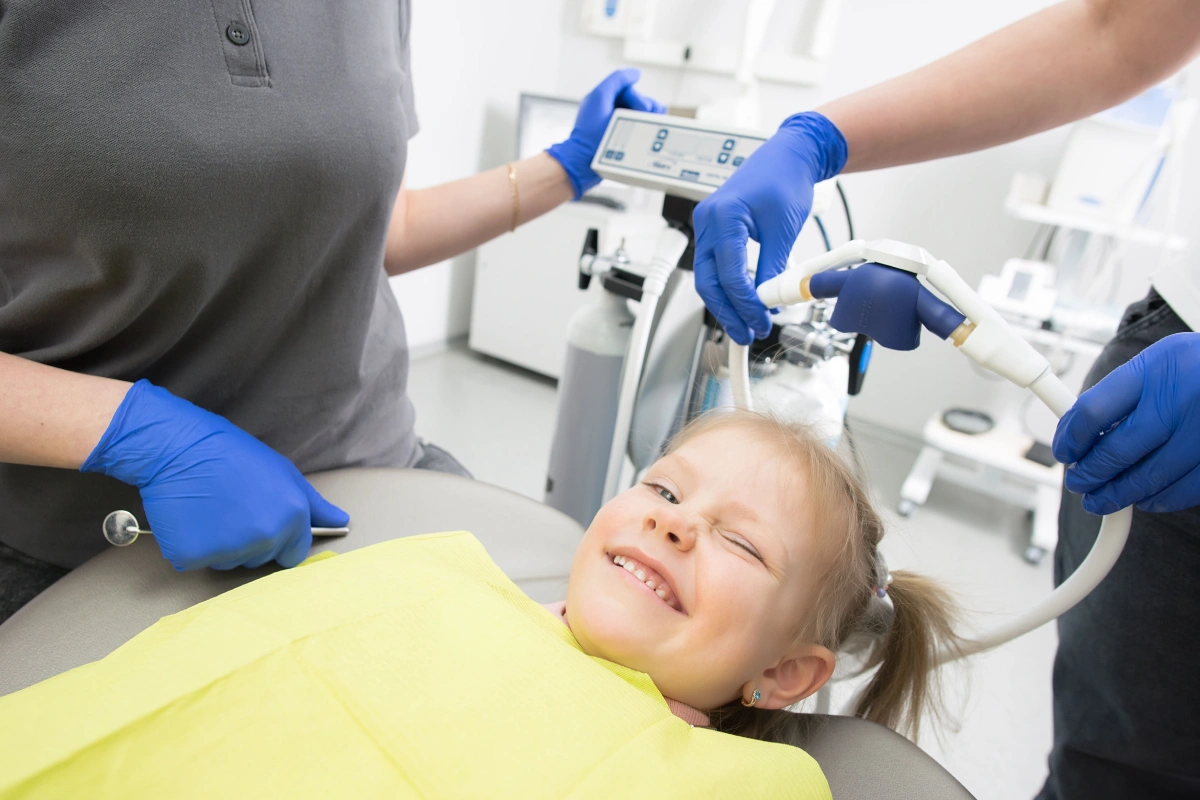

Why Early Dental Visits Are Important
Early dental visits focus on prevention, guidance, and helping your child become comfortable with dental care. These first appointments allow us to monitor growth and development while helping you build healthy routines at home.
By age one, or within six months of the first tooth appearing, your child should have their first dental visit. Starting early helps reduce the risk of cavities, identify concerns sooner, and make future visits feel more familiar and less stressful.
Our Approach to Infant Oral Care
These visits are designed as much for you as for your child. We help you understand how daily habits shape your child’s oral health.
We help you with:
- How to clean your child’s teeth and gums
- Feeding habits and early routines
- Pacifier use, thumb sucking, and other oral habits
- Building simple, realistic routines at home
You will leave with clear, practical guidance without feeling overwhelmed. We focus on education, not fear, so your child can build a healthy relationship with dental care from the start.
It Starts Earlier Than You Think
Cavity‑causing bacteria can pass from parent to child, especially in the early years. Stay consistent with your own dental care and avoid sharing utensils or cups to protect your child’s developing smile.
What to Expect at Your Child’s First Visit
Visits are simple, quick, and designed to be positive. We want to create a comfortable experience so your child can build confidence over time. Depending on your child’s age and comfort level, the visit may include a gentle dental exam and a light cleaning along with guidance for parents.
You can expect:
- A warm, kid-friendly welcome
- A short, gentle exam
- Guidance on brushing and daily care
- Time for your questions
- A small prize at the end
If your child is unsure or upset, don’t worry, that is completely normal. We will adjust the visit to their comfort level.
Real Life With Little Ones
Toddlers are not always cooperative, especially when it comes to oral hygiene. We help you find simple, realistic ways to manage routines so they feel more doable at home.
Support Healthy Habits From the Start
Small daily habits play an important role in protecting your child’s teeth. Starting early helps reduce the risk of cavities and makes routines easier as your child grows.
Consistent routines at home may include:
- Avoid letting your baby fall asleep with a bottle, especially if it contains milk or juice
- If you sleep with your baby, de-latch between feedings so breastmilk won’t pool behind their teeth, this can lead to very early decay
- Gently wipe gums after feeding and begin brushing as soon as the first tooth appears
- Limit frequent sugary snacks and drinks throughout the day
- Keep brushing routines simple, consistent, and part of your daily schedule
These small steps help protect developing teeth and support healthy habits that last as your child grows.
Balance Their Plate
As your child grows, balanced, whole-food meals support healthy teeth and overall development. Think simple and realistic with foods like fresh fruits, vegetables, proteins, dairy, and whole grains, while keeping sugary snacks and drinks less frequent.
Why Choose a Pediatric Dentist?
Pediatric dentists receive additional training beyond dental school focused specifically on infants, children, and teens. This includes child development, behavior guidance, and treating growing smiles at every stage.
Dr. Anita Ford is a board-certified pediatric dentist who understands how to adjust care based on a child’s comfort level, personality, and developmental needs. She uses a gentle, step-by-step approach and child-friendly language to help children feel more at ease during visits.
Pediatric dental offices are also designed with children in mind. From a welcoming environment to a patient, supportive team, every part of the experience is built to help children feel comfortable while building positive habits early.
FAQ
When should my child have their first dental visit?
Your child should have their first dental visit by age one or within six months of the first tooth appearing.
What happens during a baby’s first dental visit?
At Happy Little Chompers, first visits are quick, gentle, and focused on comfort. Your child may start with playtime at the train table, followed by a short exam, guidance for parents, and a prize at the end to create a positive experience.
Are first dental visits necessary if my child only has a few teeth?
Yes. Even a few teeth can develop cavities. Early visits also allow us to monitor development, provide guidance, and help your child become comfortable with dental care.
How can I care for my baby’s teeth at home?
Clean your baby’s teeth daily using a soft toothbrush and a small smear of fluoride toothpaste once teeth appear. Brushing in the morning and before bed helps keep teeth clean and supports healthy habits early.